
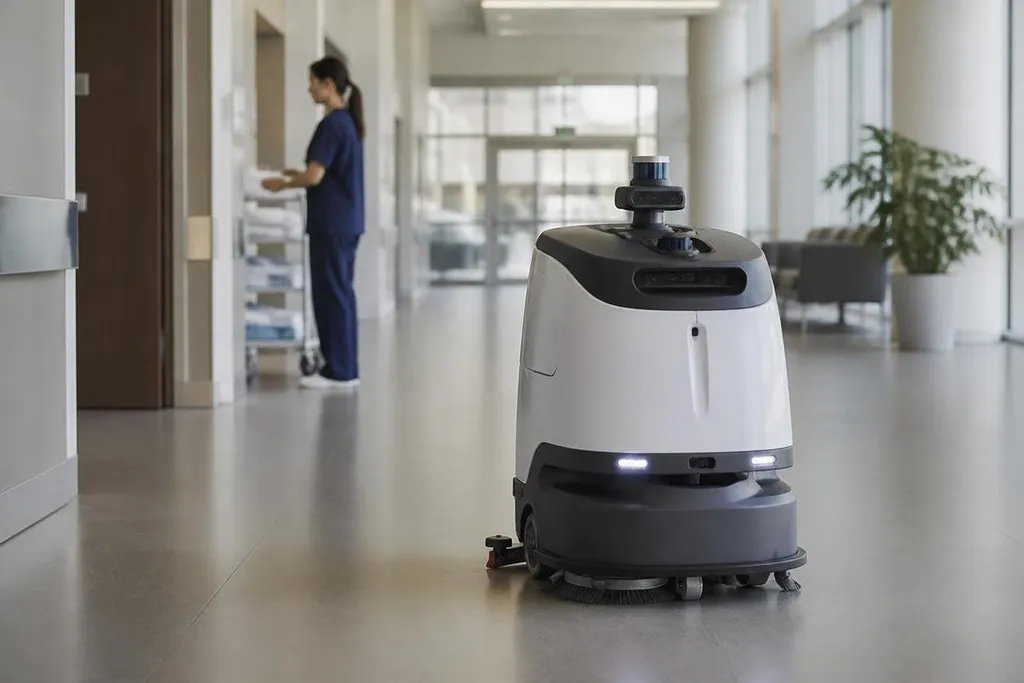
A mobility robot has a business opportunity only when it can move through a real place and finish a task someone will pay for.
The supplied material includes no company names, prices, dates, deployment counts, or test results, so this article focuses on the business questions that must be answered before money changes hands.
- Paid work before broad rollout
- A route, task, and buyer must be clear
- Remote help can hide weak autonomy
Start with the task, not the robot
Mobility is a means, not a product by itself. The system may carry parts across a factory, move waste through a hospital, inspect a site, or bring goods between rooms. Each job has a different route, load, speed, safety rule, and person who signs the purchase order.
Carrying a fixed load between two marked points may need less sensing and software than working around people, doors, lifts, and changing floor conditions. The first task can support a smaller sale because the maker has fewer problems to solve.
The buyer also needs a clear result. Does the robot cut staff walking time, keep a line supplied, reduce inspection visits, or move items during hours when people are unavailable? A pitch built around “mobility” leaves the buyer to do that work. A pitch tied to one repeated task gives them a way to judge the price.
Four ways a mobility robot can make money
The robot itself is only one part of the sale. The business may earn money from hardware, software, service work, or a mix of these parts.
A hardware sale suits a site with a known route and a team that can run the robot. The maker must still account for setup, training, spare parts, charging, and repairs. Those costs affect the buyer’s choice even when they sit outside the purchase price.
A rental or subscription spreads the payment over time. That can help a buyer test the robot without buying a fleet, but the maker then carries repair and replacement costs. The contract needs clear rules for uptime, damage, remote help, and data ownership.
A service model charges for completed work. A hospital could pay for internal deliveries, or a facility operator could pay for scheduled inspection rounds. This model puts more pressure on the robot’s actual results because payment depends on finished jobs rather than installed hardware.
Software can add another income stream when several robots share maps, task schedules, or status data. Robot operating system tools and fleet software matter here, but a buyer will ask who fixes a failed route at 2 a.m. A human operator may still sit behind the system, which changes the labor cost.
Paid mobility-robot work needs more than a clean demo. Buyers need the site, contract terms, service date, and operating results before they can price the work. Robot24.com mobility robotics coverage can connect those facts to the robot’s route and operator workload.
The hard parts sit outside the demo
Movement in a controlled space can work well while the same system struggles with details that decide a sale. Doors may close, floors may change, people may block the route, and a load may shift during travel. Each case adds software work, safety checks, or human support.
Autonomy also needs a clear boundary. A robot using simultaneous localization and mapping, or SLAM, builds a map while estimating its position. That helps with travel, but it doesn't remove the need for site setup, route changes, or recovery when sensors lose a useful view.
Data creates another question. A robot moving through a hospital, factory, or office may collect video, maps, and worker information. The buyer needs to know where that data goes, who can access it, and how long the maker keeps it.
I’d back the mobility robot with the narrowest paid task first, because a small job gives the maker a cleaner test of cost and reliability.
A buyer’s decision check
Use this list before signing a pilot or purchase order:
- Name the task in one sentence, including the load and destination.
- Record the route, doors, lifts, floor types, and areas shared with people.
- Set a measure for success, such as completed trips per shift.
- Price charging, supervision, repairs, training, and site changes.
- Ask what happens when the robot stops and who responds.
- Mark the data collected, its storage location, and the deletion rule.
A pilot should answer these points with site records, not broad claims. If the maker cannot state the task, cost, human backup, and failure response, the business case is still a demo.
The next useful evidence is simple: one named site, one paid task, one operating cost, and a record of every trip the robot completes without human help.